


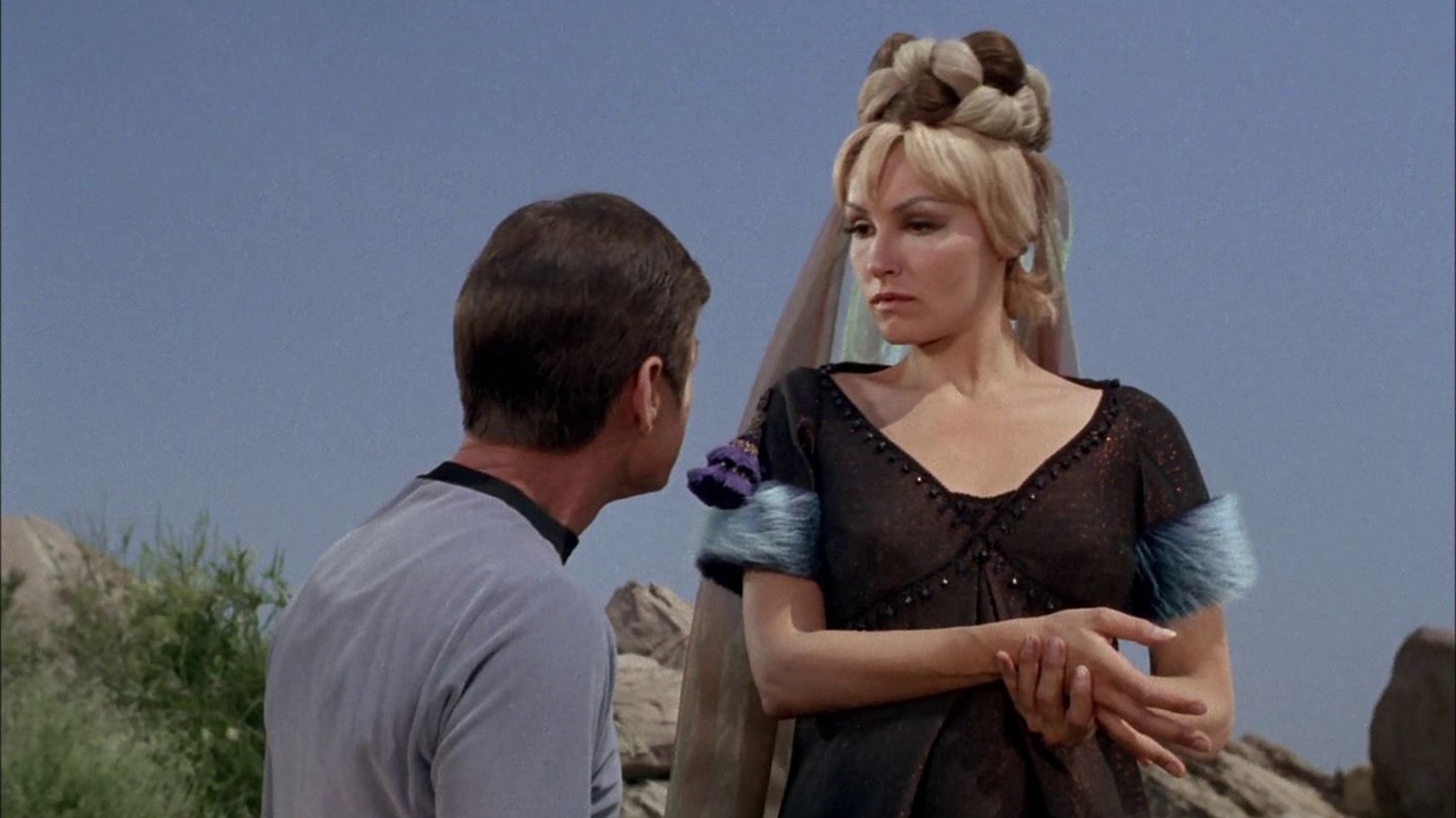
In 1967, Julie Newmar — who was already well-known for her slinky portrayal of Catwoman on one other hit Nineteen Sixties TV present, “Batman” — beamed her manner into the 2nd season of the unique “Star Trek” collection. Her character made it to the top of her episode, too. But when author D.C. Fontana had her manner, that ending would have been way more tragic.
In “Friday’s Youngster,” Captain Kirk (William Shatner), Spock (Leonard Nimoy), and Dr. McCoy (DeForest Kelley) should shield Eleen, the pregnant widow of Capella IV’s slain chief, from a usurper. The published episode ends on a triumphant, maternal notice: After McCoy delivers her child boy, Eleen — who was initially resentful of her being pregnant — positive factors a newfound maternal intuition and claims management as regent for her new child son, whom she affectionately names “Leonard James Akaar” after McCoy and Kirk.
However initially, Eleen was by no means meant to make it out of “Friday’s Youngster” alive. As a result of Capellan tradition locations larger intrinsic worth on male heirs than girls, Eleen was to provide her little one to her captors in hopes of escaping, however they might execute Eleen anyway. Throughout an interview with the Tv Academy, Fontana revealed why her script explored a a lot darker facet of motherhood. “I wished to inform a narrative a couple of girl who would even use a new child little one to avoid wasting herself,” Fontana mentioned. “… I had fun creating that tradition, that society that did not particularly revere girls besides as broodmares.”
D.C. Fontana and Gene Roddenberry clashed over the ending
NBC
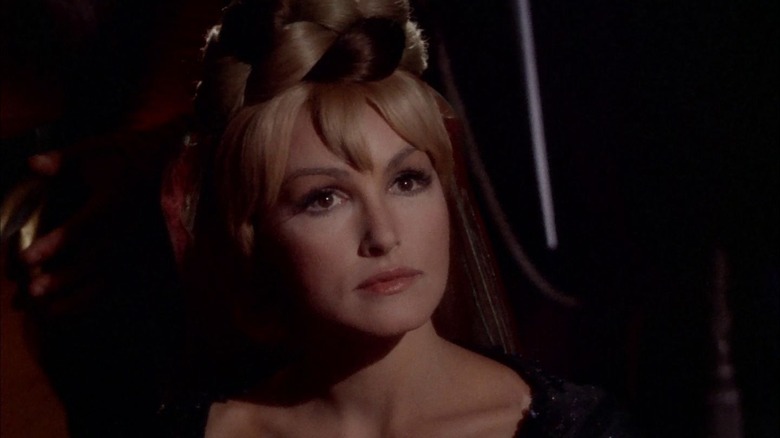
But when D.C. Fontana offered her script, she bumped heads with “Star Trek” creator Gene Roddenberry, who held a much more conventional view of motherhood. “I actually wished a really sturdy girl, and we received Julie Newmar, who was nice,” Fontana mentioned. “It was actually a couple of girl who was keen even to make use of her little one to serve herself.”
A lot to Fontana’s dismay, Roddenberry modified that ending, leaving her very sad with the ending that ultimately made it to the small display screen. “I do not assume all girls are mommies, and I do not assume all girls love their kids. I imply, simply take a look at the information,” she argued.
Fontana pushed again and defined her private views to Roddenberry however finally conceded to her boss. “He regarded girls a distinct manner … girls have been mommies, naturally, and so they all love their kids,” Fontana recalled. “I did not have any kids; I did not need any kids. So, to be sincere, I did not have that view.”

