


Picture: Courtesy of the topic
In early Could, Stephanie Coontz, America’s main historian of the household, scurried across the kitchen of her farmhouse in Olympia, Washington. Eighty-one years outdated, hardly 5 ft tall, and in denims and sneakers, she wore her hair in the identical voluminous silver crop she’s had for many years. She was fixing me a cup of tea as her husband of 30 years, seated in a brown recliner, cheerfully defined the idea of “chorenography.” By means of the home windows have been towering evergreens and a dock stretching out right into a deep-blue lake. Coontz’s grandfather had bought the 13 acres through the Nice Melancholy. Earlier than inheriting the property, Coontz, who grew up in close by Tumwater, spent summers right here as a toddler.
Chorenography is chore pornography, or, for those who’ve seen it mentioned on TikTok currently — Coontz’s husband, Will Reissner, 82, had not — chances are you’ll understand it as #choreplay. It’s the eroticization of home companions, most frequently males, taking over family labor: laundry, the dishes, any of the seen and invisible sludge of dwelling life. Who isn’t extra drawn to a person pulling his weight?
However Coontz, who has spent 5 a long time finding out marriage and household life and simply launched her seventh e book on the topic, has been monitoring the demographic information lengthy sufficient to know that the other was as soon as true. Analysis from the Nineteen Seventies and ’80s, she informed me, confirmed that ladies married to males have been in actual fact much less sexually drawn to husbands who did a more-than-average quantity of home tasks (female-coded work that’s — suppose making sack lunches, not cleansing the gutters). However it’s true, Coontz mentioned, a lot to her delight, that the info has reversed: At present a comparatively equal division of labor is likely one of the strongest predictors of relationship satisfaction, and {couples} who share chores and baby care extra evenly are likely to have extra intercourse. “Have you ever seen that TikTok video of the person within the automotive interacting along with his child?” she requested me. “He’s making noises and the newborn is responding doe-eyed. I can’t inform you what number of mates forwarded it to me. Full turn-on!”
Coontz, who’s perpetually in movement — she is an lively bodyboarder and may usually be discovered foraging for wild mushrooms on Mount Rainier or digging for clams in Puget Sound — has devoted her skilled life to creating sense of those sorts of tendencies. She research the historic evolution of marriage in addition to how trendy People kind households and divide the labor of home life. For many of her personal marriage, she cooked (she likes to prepare dinner) and normally dealt with the dishes. Reissner took care of the funds and did the laundry, together with stitching; he’d discovered how in junior-high dwelling economics. Coontz believes he had a feminist instructor.
A professor of historical past and household research because the Nineteen Seventies on the Evergreen State School (the famously crunchy, grade-free Pacific Northwest campus that counts Kathleen Hanna and Carrie Brownstein amongst its alumni and has a geoduck clam for a mascot), Coontz has been on the heart of America’s tradition wars because the early ’90s — the peak of the Reagan-era “household values” panic — when her breakout e book, The Approach We By no means Had been, argued that the picture of the postwar nuclear dwelling, that potent “nostalgia lure,” had at all times been a fiction. Nearly in a single day, she grew to become the go-to scholar on the American household — puncturing the day’s fearmongering about divorce, unwed moms, dual-earner households, and shifting gender roles. Different historians, sociologists, and feminists had superior the identical concepts she did, however Coontz made an effort to carry her work to the plenty and had a present for deploying tutorial data in public debate. She informed Oprah’s viewers that “Depart It to Beaver was not a documentary”; appeared on Crossfire with Pat Buchanan to refute his declare that new household buildings have been resulting in rising crime; and argued with Senator Daniel Patrick Moynihan, earlier than the U.S. Choose Committee on Youngsters, Youth, and Households, in protection of single moms. In 1996, she co-founded a consortium of specialists, the Council on Modern Households, to assist translate dense scholarship into plain English for the mainstream. Coontz didn’t appear like a typical lefty: At 95 kilos, in skirts and cardigans, she usually appeared to disarm, and even appeal, her ideological opponents. “I figured, for those who’re going to depart on the actually massive questions, you may as nicely depart as little as you may on the small stuff,” she informed me.
In 2005, when Coontz launched her e book Marriage: A Historical past, an account spanning 1000’s of years, most individuals understood that marriage had as soon as been an financial contract and had developed over time right into a romantic dedication. However Coontz charted the shift in rigorous element, exhibiting how and why it had occurred, and Supreme Court docket Justice Anthony Kennedy quoted it twice within the majority opinion in Obergefell v. Hodges, the case that legalized homosexual marriage.
I’d first learn Coontz round then, as a younger reporter, fascinated by the historic roots of a few of our most unquestioned traditions round gender. I discovered that males have been at instances thought of to be the extra emotional intercourse — at numerous factors within the 1800s — and that earlier than the economic revolution, women and men shared equally in breadwinning. When that modified, many males mourned the loss overtly in diaries and letters. Even the hetero courting script by which males pursue and ladies wait turned out to not be timeless: Within the Nineteenth century, etiquette guides cautioned younger males towards making the primary transfer; it was ladies and their moms who invited them to name. However within the Nineteen Twenties, when courtship started to happen in business areas that required a commerce of cash — eating places, dance halls, theaters — males grew to become the initiators.
Coontz’s new e book, For Higher and Worse: The Difficult Previous and Difficult Way forward for Marriage, arrives at an odd inflection level as extra People than ever appear to be on the lookout for new methods to construct households — making an attempt polyamory, trying IVF whereas single, shopping for houses with mates — and lots of others wish to the previous with revived longing, believing we had all of it proper a long time in the past. The truth is, by means of an examination of 5 intervals of human historical past, starting with the Paleolithic, Coontz makes the case that we live in an unprecedented transition and a tug-of-war between the previous and the long run. Whereas marriages are more and more solid for emotional achievement, they’re slowed down, she writes, by a “mishmash” of competing gender scripts from totally different eras — males as inherently pragmatic or environment friendly but in addition incompetent; ladies as main home caretakers but in addition breadwinners — a lot of which we’ve absorbed unconsciously. These concepts “function like earworms,” she writes, “intrusive refrains we will’t drive out of our heads,” influencing how we take into consideration need, cash, parenting, family obligations, and extra.
Consequently, Coontz writes, right this moment’s unions are freer than ever but in addition extra precarious, requiring fixed negotiation and reinvention whereas heavy outdated concepts pull at our heels. She believes realizing the historical past of marriage and the household might help us distinguish what we truly need — attuning ourselves “to extra complicated melodies” and “a wider vary of harmonies” of what’s doable. “We don’t but know what these new melodies could be,” she informed me. “The outdated ones preserve taking part in and stopping us from creating new ones.”
I knew that Coontz herself had a protracted and seemingly profitable marriage. However in all of the years that she has been writing about relationships, she has mentioned remarkably little about her personal. Did the outdated scripts pull at her too?
“Inform her concerning the dishwasher,” Reissner mentioned to his spouse with a smile.
Coontz, who was in actual fact headed for the dishwasher with a water glass, laughed. “For years, I’ve given talks with reference to gatekeeping and the way it’s harmful to relationships,” she informed me. In sociological phrases, family gatekeeping is when somebody — normally a girl — insists on duties being completed so particularly that their companion can’t efficiently assist, even once they attempt. “However a few years in the past, Will caught me rearranging his dishes within the dishwasher.”
Speaking about her private life made Coontz uncharacteristically nervous. “It simply by no means occurred to me,” she mentioned, “That anybody would have an interest.” We have been in her front room now, and the entrance door was open to let within the breeze — together with it got here the occasional sound of clucking chickens. Coontz and Reissner share their property with 2,400 of them (in change for year-round eggs, they’ve loaned area to an area couple with an egg-supply enterprise) in addition to occasional livestock. Reissner, a political activist and retired airline employee, who’d greeted me in a “Straight Outta Compost” T-shirt, spends a lot of his time within the natural backyard; he’s an authorized “grasp gardener.” He appeared amused by my mildly intrusive questions, grinning and pointing me to a photograph album of his spouse digging for clams.
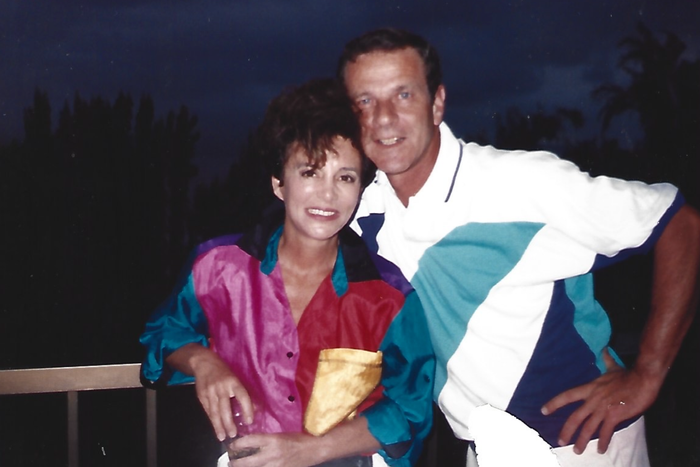
The 2 had met of their 20s, in late Nineteen Sixties Seattle, each activists within the free-speech and anti-Vietnam-war actions — he the kid of Jewish refugees who settled in New York; she the daughter of a labor organizer and housewife turned school professor. (Her mom had been woke up by Betty Friedan, she mentioned, and later taught English at an area college.) They spent these early years as mates, working collectively on numerous protest stunts. In a single, which garnered nationwide headlines, Coontz performed the function of a cigar-chomping basic who led her troops on a mission to “invade” and “liberate” the Fort Lewis Military base south of Seattle. With toy weapons and peace-sign flags, they infiltrated the bottom, handing out leaflets that inspired newly recruited troopers to hitch them in peace.
“I feel that was one of many issues we had going for us,” Coontz informed me. “All that collaboration as mates earlier than we began to be attracted to one another.”
Each Coontz and Reissner thought of themselves enlightened within the realms intercourse and gender, however, she mentioned, “Will was the larger feminist.” “There was this type of principle going round amongst the younger feminine activists on the time,” she informed me, “that there have been three sexes: males, ladies, and us. It took a while for us to acknowledge that we had issues in frequent with these different ladies, and see ourselves as a part of a sisterhood.” Reissner gave her a replica of The Golden Pocket book, the 1962 Doris Lessing novel a few single mom grappling along with her place on this planet, and informed her she needed to learn it.
They finally fell in love and moved to New York in 1971. He wrote for a left-wing journal referred to as Intercontinental Press; she took a job on the Nationwide Peace Motion Coalition, organizing mass antiwar protests. The 2 weren’t prepared to maneuver in collectively, however when a studio opened up a ground beneath his, she took it.
In 1975, Coontz bought a proposal to show at a brand new college close to her hometown — “Ex war-resister will get Evergreen college publish,” the Seattle Occasions declared. Reissner was speculated to comply with. However as he tells it, gesturing towards the woods round us, he wasn’t prepared to go away metropolis life. “It will have been totally different if she was going to Seattle,” he mentioned. “I’d been to this home quite a few instances. And I simply thought, I can’t stay there.” Coontz was heartbroken; she’d imagined their life collectively would proceed to evolve. They learn and edited one another’s writing, and he or she pictured a lifetime of mental partnership. She additionally pictured a considerably conventional relationship. “I used to be one among these caught-in-between ladies,” she informed me. She’d wished Reissner to provoke the romance (he had); she wished a wedding, a home within the nation, and youngsters.
After the breakup, they didn’t communicate for greater than 15 years; “I wanted to not set off the emotions that by no means made me cease pondering he was my excellent match,” Coontz mentioned. She dated a few different folks and finally started a relationship with one other activist she thought she may marry. Shortly after they cut up up, Coontz discovered she was pregnant, and in 1980, she gave delivery to her son, Kris, whom she raised largely on her personal. Reissner would additionally develop into a father or mother, in an analogous state of affairs: He discovered a girl he’d been seeing was pregnant after they’d cut up and he’d moved out of the state. (Coontz and Reissner would finally come to think about one another’s youngsters as their very own.)
It was throughout that transfer — he was working for Northwest Airways at that time, portray planes, they usually have been sending him from Minneapolis to Cleveland — that Reissner heard Coontz’s voice on the radio. “I’m driving this U-Haul with all my stuff in it,” he mentioned, “and I’ve NPR on, and there’s Stephanie.” She was speaking about her first e book, about how nostalgia for the largely legendary Nineteen Fifties best affected households. Then it occurred once more: “One other 12 months and a half passes,” he continued, “and I get a switch to Newark. And once more, I’m driving from Cleveland to Newark, and there’s Stephanie on the radio.”
Finally, in 1993 or 1994, at his sister’s urging, he referred to as and requested if she’d meet him for lunch. He was working the evening shift on the Newark Airport then, nearly three thousand miles from Seattle, however one of many perks of his job was free flights. They organized to satisfy on the Evergreen campus, “and I made clear: solely lunch,” Coontz mentioned. Lunch become dinner, become an in a single day, become frequent journeys on the 6 a.m. flight from Newark. Reissner started to carry up the concept of marriage. He was prepared, he mentioned, however there was additionally a sensible objective: He was nonetheless caught in Newark, ready for a switch, and spouses of airline staff might fly without spending a dime.
“I used to be reluctant,” Coontz informed me. “You realize, as soon as spurned, twice shy. And I favored my independence.” She was instructing the historical past and sociology of household life then — “Will would usually complain that I might begin sentences with, ‘Effectively, the analysis reveals’” — and actually the analysis had more and more proven that ladies didn’t want marriage to guide fulfilling lives. “You realize, in any case of my work, after being a profitable single mother, it simply struck me that possibly I used to be compromising myself to be a ‘Mrs.’ And there was one thing actually embarrassing, in any case of that independence, about saying ‘my husband.’”
However Reissner was persistent — finally colluding along with her son, then a young person, who bought down on a knee alongside him in entrance of Coontz’s stepfather throughout a household dinner. “I used to be so embarrassed,” she informed me, “I mentioned, ‘I’ll say “sure” — simply rise up for Christ’s sake!’” They have been 50 and 51 by then. That they had a potluck marriage ceremony on the native ladies’s group heart — she wore a pink costume, there have been no items — and delivered a speech assuring their mates they might not be “dropping us to coupledom.” (In her new e book, Coontz cites analysis exhibiting that sustaining supportive friendships outdoors your main partnership leads to extra satisfying marriages — and fewer melancholy. Apparently, the advantages prolong to the partner, even when they haven’t been socializing themselves.)
“Will was actually the love of my life as a result of we shared political beliefs,” Coontz mentioned, “however much more than that, he was somebody whose data I revered and who revered mine. And I had by no means met a person like that earlier than.” It was the sort of union she had spent years believing was doable: intellectually difficult, consciously constructed, although not with out its personal baggage. Coontz, in any case, had wished to marry him the primary time round.
Picture: Courtesy of the topic
When Reissner retired at 62, Coontz stored working. “I mentioned, ‘Effectively, you both have to finish the conflict in Iraq, or study to fish, or learn to repair computer systems,’” she informed me. He selected gardening, first embarking on an enormous challenge to clear timber and brush and finally establishing an elaborate compost system that earned him the unofficial title of the “compost king” of their neighborhood.
A 12 months in the past, Reissner was recognized with lung most cancers. His remedy has left him with extreme neuropathy in his legs, which has affected his stability, and the sensible rhythm of their life collectively has modified as soon as once more. He nonetheless tends to the backyard, however Coontz has taken over many of the family chores.
As she was trimming inexperienced beans for dinner — razor-clam fritters, contemporary basil and sorrel pesto, and the beans sautéed in olive oil — I made a decision to ask her what recommendation she would give {couples} navigating the present second. She referred me to a examine about what marital psychologists name “benevolent attribution,” which appears to translate roughly to “the advantage of the doubt.” Apparently, having the ability to view a companion’s undesirable habits by means of the lens of “benevolence” is likely one of the surest indicators of a wholesome relationship. “For those who truly could make your self suppose,” Coontz mentioned, “This isn’t about me, or my companion, it’s a behavior ingrained in us by outdoors forces, that may in actual fact diffuse plenty of issues.” Coontz informed me Reissner’s “masculine socialization,” in addition to his household background, might typically make him fairly impatient along with her overthinking; “I’m a second-guesser,” she mentioned.
“My private earworms,” Coontz informed me, “are largely tied in with the Nineteenth-century concept that it’s ladies’s function to observe everybody’s emotions and make them proper. And I wrestle to discover a stability between the a part of this that ought to be a human inclination” — that ought to be everybody’s function — “and it being a segregated, ladies’s job description.” It’s an ongoing pressure, she mentioned. She finds herself “annoyingly asking Will if he thinks I ought to have completed this or that,” making an attempt to maintain all people completely satisfied.
Coontz calls right this moment’s MAGA-coded home nostalgia, together with the fascination with tradwives, “past-sickness.” And she or he has empathy for folks experiencing it, believing it derives from worry and discomfort, introduced on by feeling marginalized, or left behind, by social tendencies and financial precarity. However as with “referred ache,” she mentioned — when an harm to at least one a part of the physique can manifest in a distinct half — she believes many individuals are “misdiagnosing” the supply of their emotions, believing that blame lies, for instance, with ladies within the workforce.
Later that afternoon as we hiked across the lake — Coontz striding forward in a sunhat, sometimes stopping to select wild blackberries or establish vegetation — I discovered myself questioning if she thinks folks ought to nonetheless get married in any respect. In her work and in dialog, Coontz maintains a typically irritating historic take away (“This isn’t a e book about why you must marry, or what you’ll miss for those who don’t,” she writes in For Higher and Worse), and so, in typical trend, she presents the information: “There are actual advantages you get from it,” she mentioned. “It’s stunning to me how a lot even progressive thinkers take a relationship extra critically once they know the persons are married.” Marriage nonetheless confers legitimacy, and even for Coontz that has worth.
Predicting the long run is a waste of time, Coontz informed me, however one factor is definite: There can be no return to the nuclear household, which, in its non-idealized, actual kind, was merely a historic aberration. The truth is, marriage has by no means been only one factor for any prolonged time frame — it’s at all times been in flux. In recognizing that, she mentioned, everybody had a greater probability of “muddling by means of.”
I requested her why, realizing every little thing she does concerning the historic weight perpetually pulling marriages backward, she’d chosen to do it herself.
She paused, stopping on the path. “For many individuals, I feel it’s truly taken on a better expression of dedication,” she mentioned. “As a result of we all know there are different selections.” She didn’t should do it, and so she wished to. On the identical time, marriage supplied the sensible stability we think about it’s at all times had. “It’s some extent the place we will cease interrogating this relationship and whether or not we’re in love,” she mentioned. “We are able to begin taking one another a bit of bit with no consideration.”

