


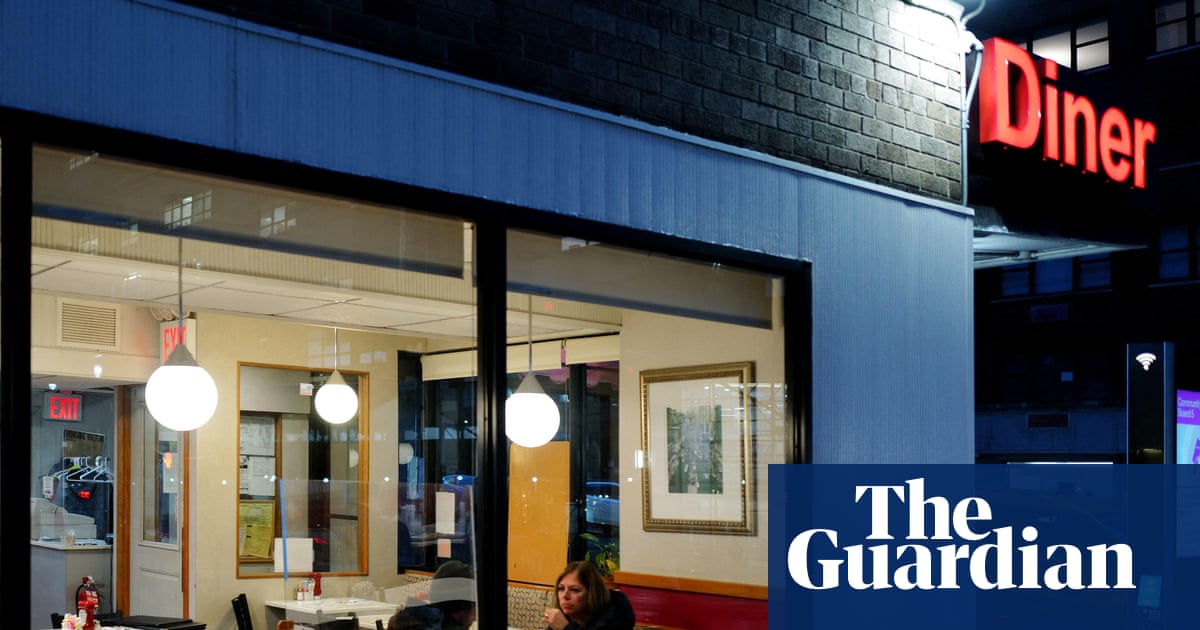
I first had the thought of writing a e-book about loneliness in 2012. I was 35 and had simply moved to New York Metropolis after I grew to become misplaced in a labyrinth of isolation and distress. A love affair had ended abruptly whereas I used to be nonetheless sky-high with expectation, buoyant with aid that I used to be lastly coming into settled coupledom. To have failed on this transition, to have been rejected and left alone, stuffed me with a disgrace that felt actually unspeakable.
So there I used to be: alone within the metropolis, an exile condemned to observe the world go by. It was a humiliating and really scary feeling. The ache was intensified, as a damaged leg or perhaps a damaged coronary heart wouldn’t have been, by the truth that my loneliness felt inadmissible, a factor that would not be stated for concern of repelling different folks. This was essentially the most alarming facet of the expertise, in that the necessity for concealment additional entrenched the isolation, in order that loneliness grew ever extra inescapable, a fortress of solitude whose bulwarks and ramparts wouldn’t cease rising.
However as quickly as I realised that loneliness functioned on this unusual, accretive manner, it grew to become weirdly attention-grabbing to me. What was it, this emotion that felt so radioactive, so shameful it couldn’t be acknowledged? What did it seem like, what have been its attributes? Had been different folks additionally experiencing it, as silently as me? If as an individual I used to be mainly determined, the author in me was beginning to realise that I had blundered into unmapped territory.
The best definition of loneliness is a state of eager for extra connection and intimacy than you’ve gotten. It isn’t the identical as solitude, which might be nice and satisfying, and nor does it require whole bodily isolation. You might be lonely at a celebration; lonely in a wedding. The feeling is acutely painful, and brings with it profound bodily penalties. Loneliness raises blood stress, accelerates ageing and cognitive decline. It causes insomnia, weakens the immune system and predicts elevated morbidity and mortality. To place this in unusual language, it might probably show deadly.
double citation mark
Loneliness is not a taboo state. It’s extensively mentioned as an emotional expertise akin to despair or nervousness
As as to if different folks skilled it, I rapidly realised that the lonely metropolis was a really populated house certainly. I carried out my investigations by the use of visible artists, amongst them David Wojnarowicz, Andy Warhol and Henry Darger. Whereas we assume loneliness is the results of private failure, a scarcity of attractiveness indirectly, what I found by manner of analyzing their lives is that loneliness is commonly a consequence of bigger social forces of stigma and exclusion, which serve to isolate weak populations of many varieties. Being poor, an immigrant, ailing, transgender, an individual of color or of divergent sexuality: these have been the drivers of isolation. If The Lonely Metropolis had a takeaway message, it was that loneliness is political and may by no means be a supply of disgrace.
No less than a few of that disgrace has fallen away since my e-book was first revealed in 2016. Loneliness is not a taboo state. It’s extensively mentioned, each as an emotional expertise akin to despair or nervousness, and as a social drawback, the topic of educational analysis and authorities coverage. It’s even considered a worldwide public well being concern. The 2024 Well being Survey for England reported that 22% of the grownup inhabitants felt lonely a minimum of a few of the time, with 6% – round 4 million folks – feeling lonely typically or at all times, whereas the 2025 World Well being Group report on social connection discovered that one in six folks across the globe are lonely.
Although Theresa Could appointed the world’s first minister for loneliness in 2018, I think the diminished stigma is largely a consequence of the mass encounter with loneliness that occurred through the Covid-19 pandemic, affecting even folks beforehand inoculated by a wealth of social connections. In accordance with the British Crimson Cross, 41% of individuals reported feeling lonelier through the pandemic.
Even the lonely generally tend to consider that loneliness is their very own fault, a product of one thing basically dislikable in their very own being. It’s onerous, when struggling one thing so culturally despised, to not blame oneself. However loneliness is commonly contingent on circumstances akin to new motherhood, home strikes, loss or bereavement. The lockdowns served as a worldwide demonstration of this important randomness, confronting many beforehand socially safe folks with proof that life can change, ushering in a daunting isolation.
However by far the best change in loneliness over the previous decade is to do with the web. Social media has weaponised loneliness, manipulating it in methods I couldn’t have imagined 10 years in the past. Throughout my loneliest occasions, the web was a supply of solace to an extent that I discover flabbergasting now. Twitter particularly was a spot of contact and neighborhood, not the trolling and loss of life threats that characterise X below Elon Musk’s possession.Though I used to be sceptical about tech’s capability to alleviate isolation, I didn’t foresee how social media would facilitate the rise of the far proper, inaugurating a brand new period of violent exclusion, wherein the fitting to belong is perpetually being rescinded. Nor did I think the position that loneliness would play on this course of – although it doesn’t shock me that loneliness can also be among the many penalties of this ugly new panorama of hatred and division..
Studies on the “loneliness epidemic” have lengthy mentioned the alienating and atomising impact that our migration on-line has had on the general public realm. Whereas 10 years in the past the main focus was on the lack of bodily togetherness in favour of screens, consideration has now shifted to the highly effective algorithms that herd us into digital pens, data silos that imply folks inhabit divergent and more and more excessive realities, with distorting results on our shared civic society.
Loneliness isn’t only a consequence of an ever extra digital world. It’s also an exploitable vulnerability that lies behind a lot of the violent extremism that proliferates on-line. As Hannah Arendt places it in The Origins of Totalitarianism, “loneliness is the frequent floor of terror”. The method by which it curdles into rage and a need for retribution doesn’t occur in a vacuum.
Far-right teams prey on loneliness, utilizing the sentiments of being left behind, remoted, disregarded and ignored as a recruitment software, and providing potent narratives that stoke grievances and displace vulnerability on to different our bodies that may be hated and attacked. Even Tommy Robinson’s outspokenly racist and Islamophobic Unite the Kingdom rallies promise to “strengthen neighborhood bonds” and “carry folks collectively no matter background, perception or circumstance”.
One of many many areas wherein this course of happens is the manosphere. The mass assassin Elliot Rodger, an “incel” and self-described “lonely virgin”, explicitly blamed loneliness for his actions in his misogynistic manifesto My Twisted World, describing the 2014 Isla Vista assault as an act of retribution towards those that had rejected him. As his manifesto demonstrates, the manosphere attracts the lonely by providing a compelling ideology that reframes private rejection and isolation as deliberate and systematic exclusion, offering a ready-made enemy in charge within the type of girls. Like many far-right actions, the language is of grievance and entitlement. Whereas no remedy is obtainable aside from the violent punishment of those that refuse the incel’s self-proclaimed proper to intercourse, there’s a sense of belonging and which means, nevertheless warped.
These concepts have filtered into the mainstream by the use of influencers like Andrew Tate, who promote poisonous masculinity as an answer to loneliness in a cartoonish manner that notably appeals to boys and younger males. The issue with this supposed remedy might be seen by the use of Tate’s latest absurd assertion on X: “In the event you’re a straight man with a girlfriend in 2025, you’re homosexual.” In selling such totalising ranges of hatred and suspicion of girls, poisonous masculinity really entrenches loneliness, shutting down the vulnerability and empathy which are the stipulations of affection and intimacy; even friendship.
double citation mark
The sensible options focus not on relationship or friendship a lot as neighborhood belongings
If massive tech has generated alarming new types of loneliness, it additionally guarantees new options. AI chatbots and avatars akin to MyAI, Replika and Gylvessa are aggressively marketed as cures for isolation: endlessly flattering replacements for human associates and lovers. Hyper-realistic AI girlfriends with names like DreamGF, Sweet, and Grok’s “Lolita-style” Ani are perpetually obtainable and compliant, with no wants or calls for of their very own. Whereas these simulacra of relationships would possibly present consolation and comfort, they once more threat entrenching loneliness, this time by deskilling the person within the two-way calls for of intimacy, lowering their tolerance for the mandatory give-and-take, the onerous work and potential disappointment incumbent upon any human relationship.
This may be a shocking factor to say, however I don’t suppose a romantic associate is essentially the reply to loneliness anyway. I used to be decided that The Lonely Metropolis wouldn’t finish with me fixing the “drawback” of loneliness by assembly somebody and thus gaining my passport out of unhappiness. If loneliness is political, a consequence of stigma and exclusion, then the answer will not be a associate, be it human or AI. As an alternative, what’s wanted is a solidarity of distinction. We make the world much less lonely by refusing stigma. We don’t defeat it by stigmatising others. The true lesson of loneliness is one in all collective vulnerability and shared obligations of care.
One of the attention-grabbing findings of the 2024 Well being Survey for England was that loneliness reveals a powerful correlation with space deprivation. The sensible options put ahead by our bodies such because the Crimson Cross, the Marketing campaign to Finish Loneliness and the Jo Cox Fee on Loneliness focus not on relationship or friendship a lot as neighborhood belongings akin to transport, inexperienced house, social centres and actions.
double citation mark
Far-right teams use the sentiments of being left behind, remoted and ignored as a recruitment software
These are locations the place folks can expertise what sociologists name “weak ties”, a way of being related and visual, an individual who issues inside a sustaining neighborhood. However these areas and assets – from mom and child teams, parks and libraries to rural bus routes, youth golf equipment and surgical procedures – have been decimated by austerity and years of systematic underfunding.
It’s no coincidence that the areas of the nation experiencing the best ranges of loneliness are additionally those the place the far proper is gaining in recognition. Over the previous few years, I’ve come to think about loneliness as the important thing to our turbulent politics, the foundation trigger that must be addressed if we’re to keep away from a rising wave of violence and distrust. Specializing in it as an underlying wound is a option to sidestep the relentless polarisation of issue-based positions. And if loneliness is greatest handled by repairing the tears within the social material, then that work may be probably the most highly effective instruments we now have for resisting the far proper.
Olivia Laing can be speaking about The Lonely Metropolis at Union Chapel, London, on 23 June.

