


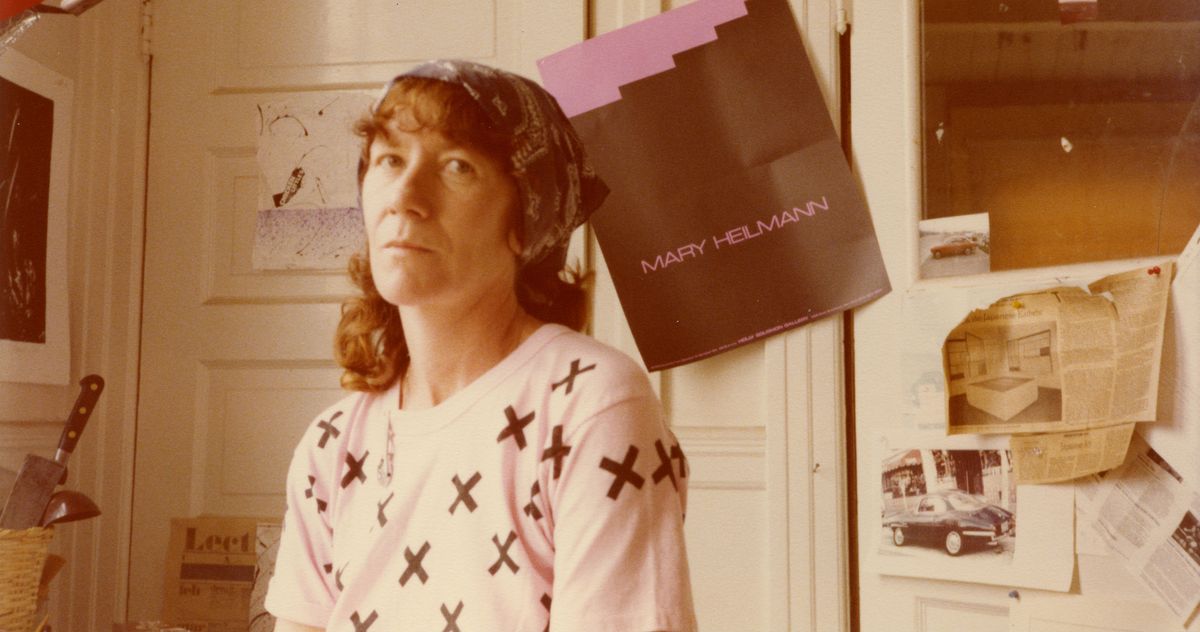
The naughty, vivid, touching work of the late artist gave abstraction a much-needed pulse.
Photograph: Mark Magill/Courtesy the artist, Hauser & Wirth and 303 Gallery, New York
“I needed to trigger hassle,” Mary Heilmann as soon as stated. And he or she did. Not with manifestos or work that introduced itself as political however by difficult the ridiculously male concept of what critical artists and critical portray had been speculated to appear like.
Heilmann, who died final week at 86, made a number of the strangest, sweetest, funniest, hardest, and most deceptively stupid-looking work of the final 50 years. There are squares that aren’t sq.. Grids that appear to have forgotten the foundations of grids. Her strains wobble. Her rectangles appear like any person lower them out with youngsters’s scissors. Her colours are ebullient, principally building-block main colours made scorching: pink, acid inexperienced, black. Paint drips and runs over the perimeters and down the perimeters. Shapes stumble upon each other. Issues are too huge for the place they’re. Or too small. Every little thing is barely askew.
Have a look at “Little 9 x 9,” from 1973, a finger-painted grid of black strains floats in a discipline of deep purple. You possibly can comply with the order by which every stroke was made, one crossing one other, one line hesitating, one other thickening, one other thinning. It’s virtually as if the portray is correcting itself whereas it’s being made.
These tiny deviations are the purpose. Errors turn into construction. Heilmann took the supposedly impersonal unit of recent artwork, the rectangle, and embodied it. She turned it into one thing touching reasonably than calculated, felt reasonably than measured. In her work, geometry will get a pulse. That’s one in every of her biggest innovations. She made abstraction keep in mind that any person had truly been right here.
I knew Mary solely from afar, however she was an exquisite particular person to speak with about virtually something. My spouse, Roberta, and I visited her as soon as at her tiny seashore home within the Hamptons. It felt much less like visiting a well-known artist than spending a day with somebody from the Beat Technology. She was mellow, sly, and naughty, laughed simply, and carried that unmistakable California ease. She got here out of San Francisco when it was nonetheless attainable to imagine artwork, music, friendship, and freedom belonged collectively.
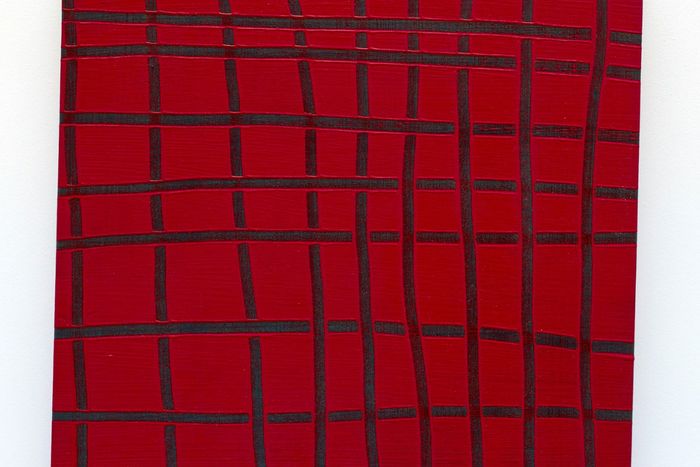
“Little 9 x 9” (1973).
Photograph: Stephen White/ Courtesy of 303 Gallery, New York and Hauser & Wirth
Agnes Martin was, Heilmann stated, “an enormous hero for me.”
You possibly can see Martin in Heilmann’s grids. However Mary retains the physique and whimsy within the geometry. Martin’s penciled strains aspire to silence, stillness, transcendence. Heilmann’s edges are imperfect; house is rarely actually flat. Her colours might be vulgar, vivid, or humorous. We really feel the hand, the wrist, the finger, the particular person. You possibly can see traces of Heilmann’s freedom in youthful painters as totally different as Pam Glick and Laura Owens.
When Heilmann arrived in New York in 1968, minimalism, post-minimalism, and Conceptual artwork had been turning the town into one huge male dominion. Robert Smithson. Richard Serra. Carl Andre. Metal. Bricks. Earth. Methods. Principle. Critical males being critical. She got here out of ceramics and initially needed into that smart-art world. She later described herself as “like a lady eager to play sports activities with the boys.”
She was largely excluded, and reasonably than imitating them, she quietly modified the sport. Her work carry virtually not one of the acquainted indicators of masculine authority that dominated a lot artwork of that second. There’s no industrial fabrication. No polished severity. No theoretical swagger. No immaculate surfaces saying their very own intelligence. As a substitute there’s awkwardness, pleasure, odd scale, bodily intelligence. Her work look virtually informal. Nearly dumb. Like anybody might have made them.
But the intelligence is brimming over. In that artwork world, a pink portray was already selecting a battle. Heilmann known as pink a “culturally hip, naughty colour” and “a tough, tough colour.” Requested whether or not her work had been fairly or powerful, she didn’t make a alternative: “Fairly and difficult on the identical time.” Precisely. Fairly wasn’t give up.
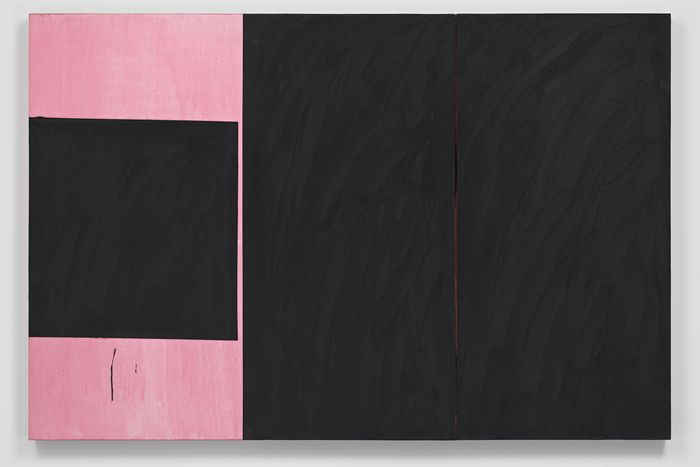
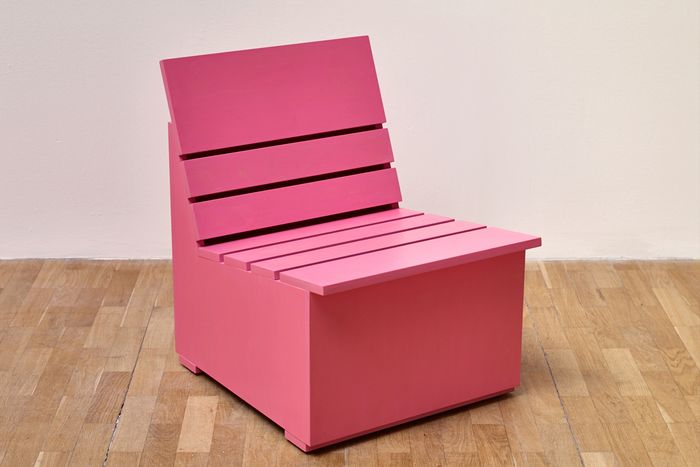
From left: “Tehachapi 1” (1979). Photograph: Mary Heilmann/Courtesy of the artist, 303 Gallery, New York, and Hauser & Wirt“Sunny Chair for Whitechapel” (2016). Photograph: Whitechapel Gallery
From prime: “Tehachapi 1” (1979). Photograph: Mary Heilmann/Courtesy of the artist, 303 Gallery, New York, and Hauser & Wirt“Sunny Chair for Whitechapel” (20… extra
From prime: “Tehachapi 1” (1979). Photograph: Mary Heilmann/Courtesy of the artist, 303 Gallery, New York, and Hauser & Wirt“Sunny Chair for Whitechapel” (2016). Photograph: Whitechapel Gallery
In Berkeley, the place California clay tradition yanked ceramics out of the class of well mannered craft and into one thing big, bodily, ugly, and exquisite, Heilmann realized to weld. She realized to make molds. Above all, she realized to belief her palms. She typically confirmed her work alongside her gaudy glazed ceramics — lumpy, shiny, fired issues that proudly introduced that they had been dealt with. Then got here the painted chairs, benches, and tables. Some appear like Donald Judd furnishings after any person loosened its collar. Judd’s furnishings asks you to admire it; Heilmann’s asks you to sit down down and chill. At her 2007 Orange County Museum of Artwork retrospective, she advised college students that in the event that they noticed any person attention-grabbing throughout the gallery, they need to merely roll one in every of her chairs over and begin speaking. This tells you one thing basic about her work. A portray doesn’t stand over you demanding reverence. It entails you, invitations you in, flirts with you.
“The work was all the time made,” she as soon as stated, “to place one thing bodily out into the world so that folks might have a dialog about it — or perhaps a battle.”
There’s one other a part of her life that belongs right here. Heilmann spoke brazenly about years of consuming and drug use. “I used to be an actual heavy drinker and stoner and drugger,” she stated. In 1983, at 43, she bought sober. A long time later, she was nonetheless speaking about Alcoholics Nameless and Narcotics Nameless as central components of her life. I do know multiple artist in restoration whom Mary quietly inspired, talked via troublesome moments with, or helped discover a sponsor.
She particularly beloved youthful folks getting sober. She talked about going to conferences and hanging out with “all of the younger, new ones getting clear,” including that an older sober particular person might have “a giant, enjoyable impact on them.” Then, completely Mary, she instantly turned the hierarchy the other way up: “I get rather a lot from them, too.” Sobriety modified her, nevertheless it by no means sobered up the work.
Late in life, Heilmann succinctly relayed the ambitions of her era. “We all the time needed to be not wealthy and well-known, however poor and well-known,” she stated. “That was the mannequin, like Pollock and de Kooning.” That’s an artist’s reply. Not respectable. Not profitable. Simply critical sufficient to matter.
In the long run, Heilmann was well-known. Extra necessary, she grew to become indispensable to her time. She reminded us that the deepest intelligence typically disguises itself as play.

