


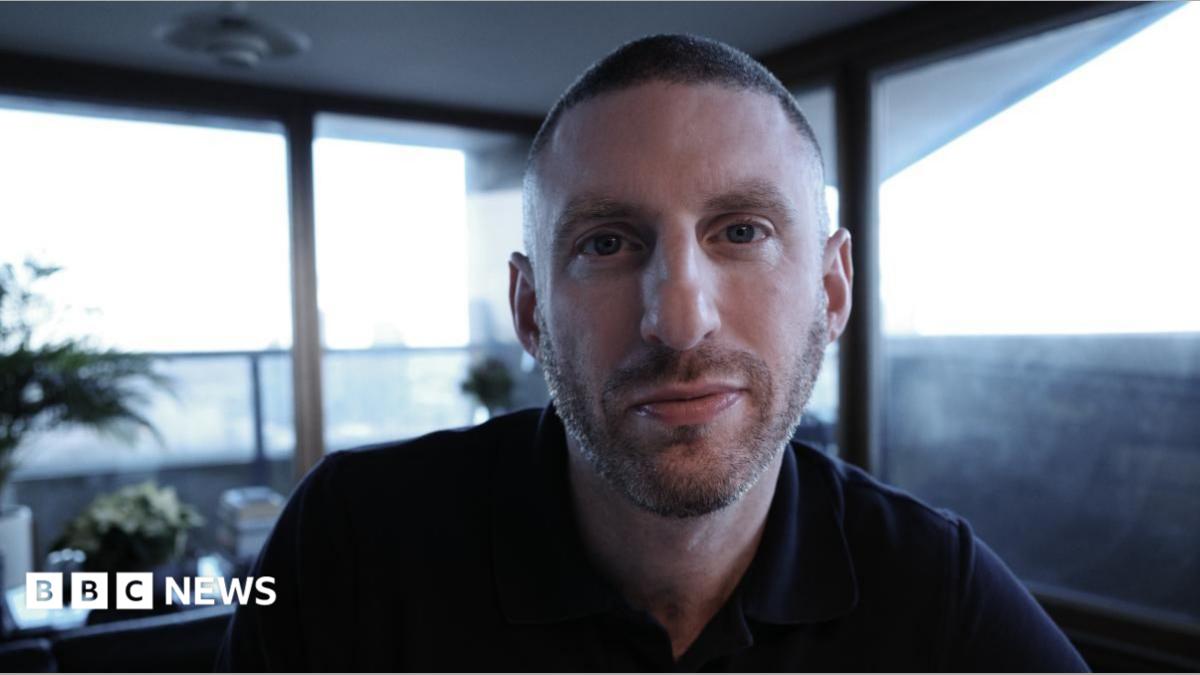
An ADHD charity has stated it has complained to media regulator Ofcom a couple of Channel 4 documentary that advised the situation is a fable.
The programme, titled The Nice ADHD Delusion?, was broadcast on Tuesday and its host, NHS psychiatrist Dr Max Pemberton, concluded it was “a social assemble, not a dysfunction of the mind”.
ADHD UK filed a criticism, saying: “ADHD isn’t a fable. It isn’t a social assemble.”
The Royal School of Psychiatrists additionally warned in opposition to “invalidating the situation”.
Channel 4 defended the present, saying there may be “appreciable public debate on varied facets of ADHD” and it “is respectable for that debate to be explored and for standard understandings to be challenged”.
The programme featured specialists who’re sceptical about ADHD and the best way it’s handled.
It additionally adopted a 10-year-old boy who stopped his treatment and made way of life modifications to see the way it affected his behaviour. The documentary ended along with his mom saying he would keep off the medicine in the meanwhile.
A caption on the finish of the programme stated the boy went again on his treatment two months after filming and his college efficiency improved, however that he needed to come back off them once more sooner or later.
ADHD UK stated, exterior: “The programme’s personal finish credit informed you what its 60 minutes would not: the boy at its centre went again on his treatment, and his schoolwork improved.
“Their experiment disproved their conclusion. They aired their model anyway. We’ve got already complained to Ofcom.”
There was additionally criticism from Prof Subodh Dave, president of the Royal School of Psychiatrists, exterior, who acknowledged that individuals “could have their very own opinions concerning the analysis and remedy of ADHD”, however stated: “Invalidating the situation does a disservice to individuals with ADHD and professionals concerned of their care.”
He added: “The main target must be on enhancing entry to high-quality assessments and care by addressing ready lists that go away many individuals with out important help for years at a time, not questioning the legitimacy of a well-established neurodevelopmental dysfunction.”
One other charity, ADHD Embrace, raised issues with Channel 4 upfront, exterior, warning the programme risked “perpetuating misinformation about ADHD as a situation and discrimination in opposition to these households whose lives have been severely impacted by the situation”.
In an announcement, Channel 4 stated: “This documentary doesn’t deny the lived expertise of these recognized with ADHD, however does current the view of an in depth vary of senior medical specialists – lots of whom work or have labored with the NHS or have held presidential roles at skilled membership our bodies – who search to query the standard understanding of ADHD and if it’s a neurodevelopmental situation.
“In addition they ask whether or not trendy residing has contributed to an increase in diagnoses, and whether or not there could also be higher alternate options for some kids than treatment.”
The channel additionally stated the programme sought to discover whether or not societal elements had been contributing to the rise in analysis and medicine, particularly amongst boys.
Channel 4 stated: “While the movie doesn’t search to offer solutions from one household’s expertise, their experiences have opened up dialogue round whether or not immediately’s world is supplied to accommodate ADHD behaviours and the ethics of medicating these, notably in kids and notably when the long-term results stay unknown.”
The Guardian known as the programme “essentially the most controversial present of the yr”, exterior, and its four-star evaluation stated the documentary “will incense and offend a few of its viewers”, however that “Pemberton solutions his questions convincingly”.
The Occasions additionally gave 4 stars, exterior, saying a lot of the documentary “felt convincing, or at the very least the beginning of a mandatory dialogue”.

